Football Manager is a deeply established product, with decades of features, behaviours and expectations built up across its player base.
I joined Sports Interactive during one of the biggest transformations in the game's history. The studio was moving to Unity, introducing a new design system and rebuilding the experience across PC, Console and mobile at the same time.
I led the design of several high visibility areas, most notably International Management. But the project also became one of the most valuable experiences of my career, exposing me to the challenges of delivering good product design when technical change, organisational pressure and an enormous product scope collide.
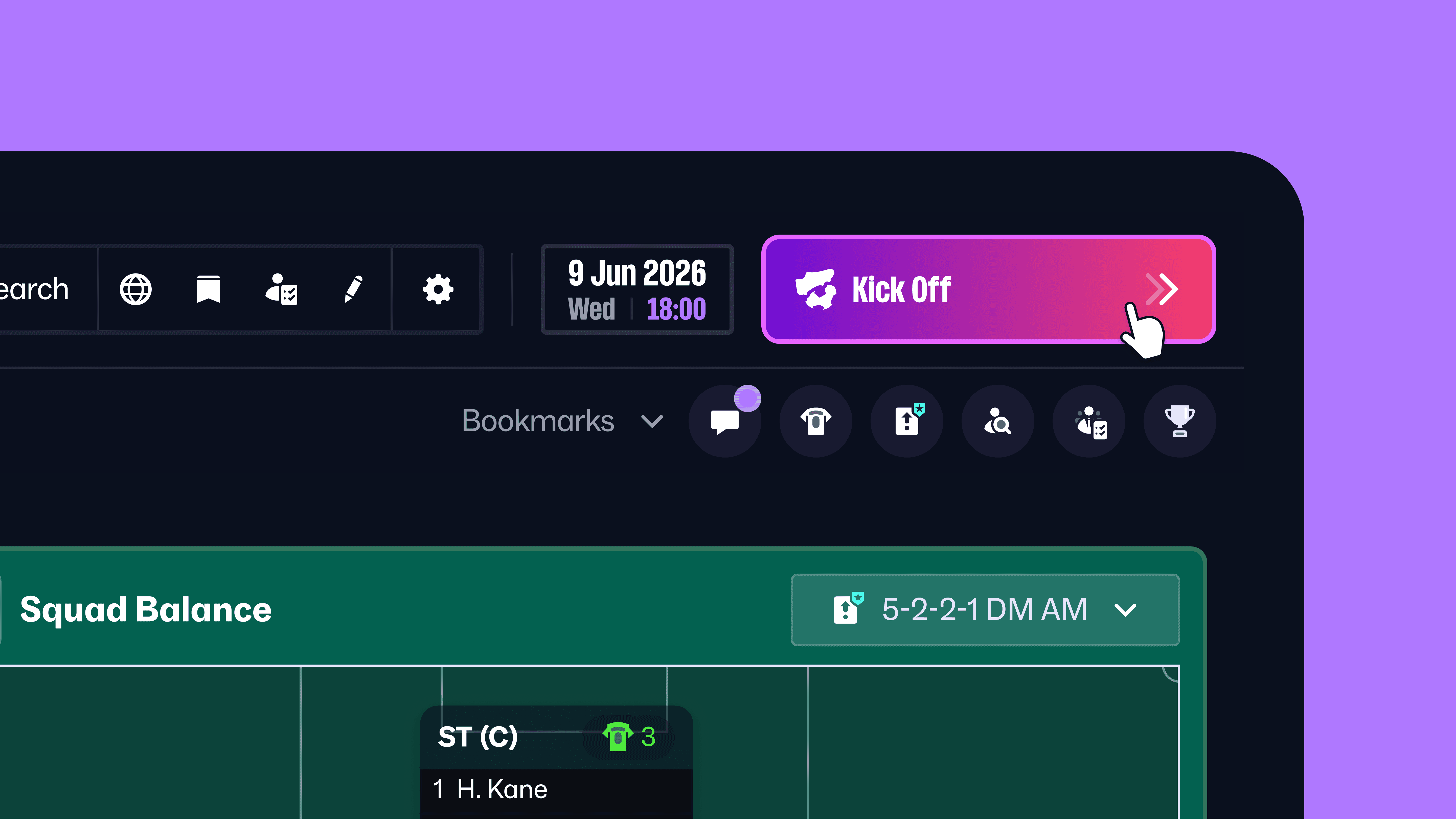
I joined midway through the FM25 development cycle, as the studio was simultaneously moving to Unity, introducing a new design system and overhauling the information architecture across multiple platforms.
As these systems evolved, the volume of design work grew to more than 10× the previous development cycle, with decisions increasingly creating dependencies across features and teams.
International Management was itself a large interconnected game mode, requiring changes across navigation, squad management, news, competitions and existing game systems.
FM25 was eventually cancelled after the overall experience failed to reach the required quality for release, with the work continuing into FM26 under significant delivery pressure.

I led an information architecture audit of International Management to understand the scale of the experience, expose dependencies and create a shared view of the work ahead.
I worked with game system designers, senior producers and lead engineers to turn this complexity into clear requirements and prioritised design tasks.
I used and expanded the design system to solve repeated interaction problems consistently, rather than designing individual screens in isolation.
As the scope increased, I brought another UX designer into the squad, split ownership and managed their workload while retaining oversight of the wider experience.
I regularly reported progress to the Design Lead and presented work to the Studio Director, maintaining alignment and taking International Management from inception to design sign-off in 12 weeks.
As designs moved into production, I learnt the team's Unity workflow to understand how decisions were being translated and adapted during implementation.
During my final eight weeks, I worked directly within Unity, submitting changes and resolving high-severity UI issues alongside engineering rather than stopping at design handoff.
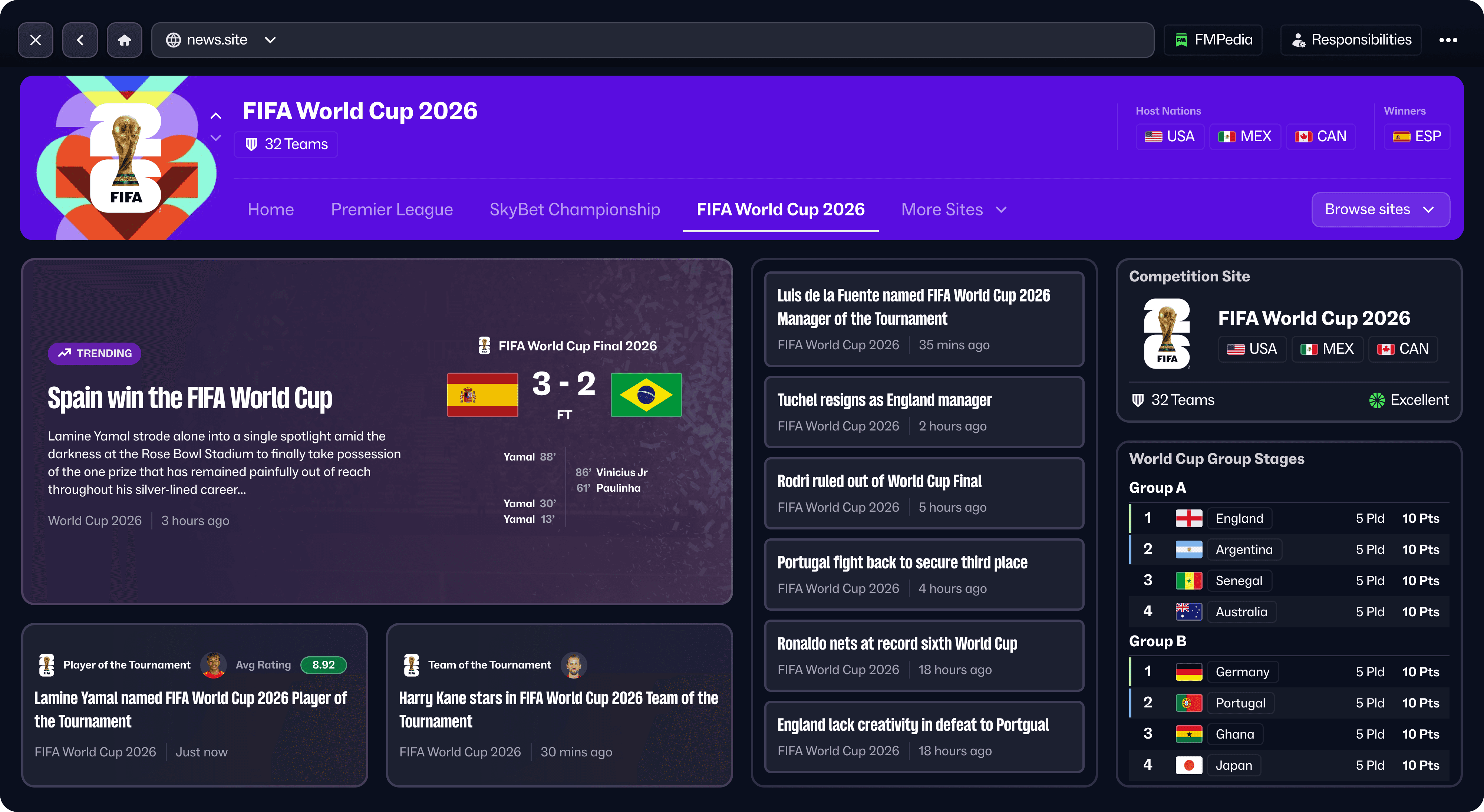
The news aggregator within the International Management game mode allows users to immerse themselves in major international tournaments like the FIFA World Cup 2026.
I delivered my areas of International Management through a period of significant product, technical and organisational change, from early definition through to implementation.
However, meaningful user testing happened far later in development than I would advocate today, limiting our ability to validate complete journeys while they were still easy to change.
FM25's cancellation demonstrated that successfully delivering individual features doesn't necessarily create a successful overall experience when those features aren't continuously validated together.
The subsequent reception to FM26 reinforced that lesson: the quality of individual designs matters less if the end-to-end experience isn't working coherently for players.
It fundamentally changed how I work today. I place greater emphasis on early validation, understanding dependencies, testing complete journeys and challenging the conditions required for good design to become a good product.
Football Manager changed how I think about design leadership.
I joined believing that my responsibility was to produce the strongest possible design within the area I owned. I left understanding that senior designers also have a responsibility to question whether the wider conditions exist for good design to become a good product.
FM25's cancellation and the reaction to FM26 reinforced that successfully delivering individual features doesn't necessarily result in a coherent experience. When an organisation is simultaneously changing its technology, information architecture, interaction model and visual language, the connections between those decisions become as important as the decisions themselves.
If I approached it again today, I would push much earlier for ongoing user validation and end to end prototypes.
That experience has shaped how I work today. I spend more time understanding dependencies, creating alignment across disciplines and considering how design decisions make their way through to production.


Made in the North West, UK